Posts

Forensic Detection of Files Deleted via SDelete
Image
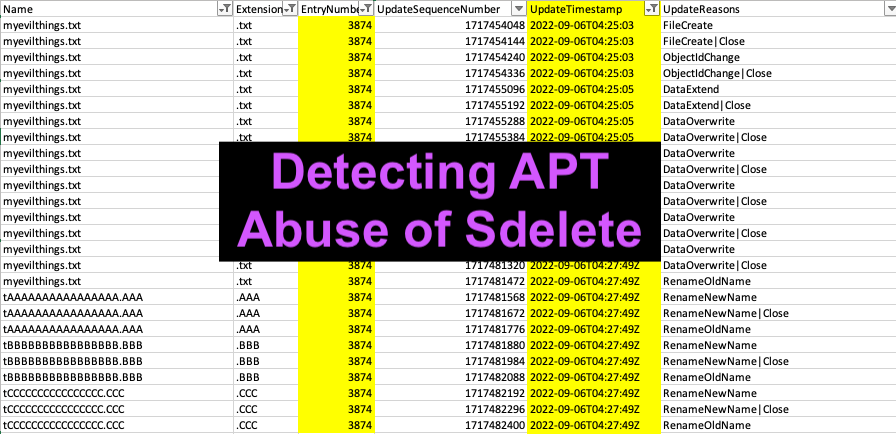
Russian nation-state adversaries abuse the tool “sdelete” to perform file deletion of their attack files. Sdelete is still being used by IRON HEMLOCK (APT29)  in 2022 as a part of defence evasion. The tool “sdelete” was created by Mark Russinovich and is used to securely prevent files from being recovered through deleting the file and overwriting the file data in unallocated portions of the disk. What's annoying about this tool is it shows artefacts with overwritten filenames "AAAAAA.AAA" instead of the original name. This is a quick forensics write-up demonstrating that you can in fact, recover the original file names from analysis of $J.  DETECTION METHODOLOGY When sdelete is utilised, it leaves obvious traces in the USN Journal, $J file where 26 unique entries will be created in alphabetic order as pictured below. This is a dead giveaway that “sdelete” was utilised by the threat actors. The best way to review the $J file is to parse by the Entry Number. This correspon...
How to Detect OAuth Access Token Theft in Azure

Image
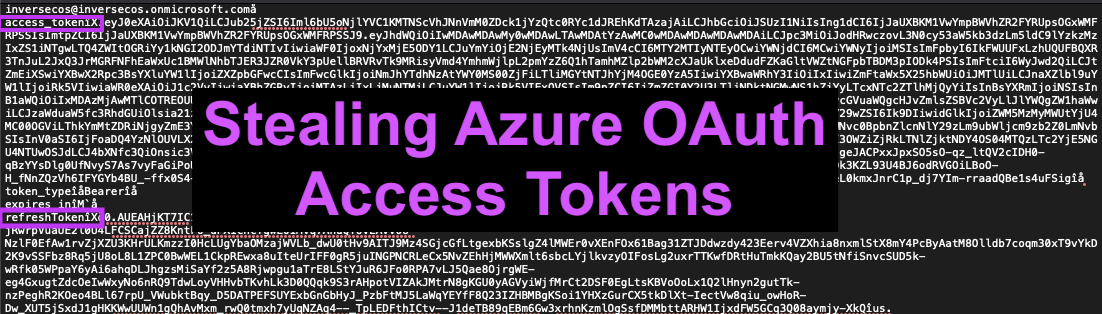
Stealing access tokens to gain access to a user’s account in Azure is a technique that’s been actively used by threat groups over the past few years. I’ve observed this technique in several engagements across the past few years from Chinese APT groups. Generally, this is done through a spear phishing / phishing email with a link that requires a user to grant access to a malicious application through OAuth’s authorization code flow. This enables the attacker-controlled application to access the user’s data. I’ve broken the blog into two components: Attack overview Detection methodology ATTACK OVERVIEW The attacker will register a malicious application and generate a phishing link in an email that takes a user to a page that looks like the image below. This will generally show information including the app name (in this instance it’s listed as “evilapp”) – whether the app is verified / unverified and then the option to accept or not.  Just a side note: in almost every instance, the t...

Detecting Linux Anti-Forensics: Timestomping

Image
  Threat actors can modify the timestamps on malicious files to evade detection.  This technique has been used time and time again across various APT and opportunistic threat groups. How do you detect this when auditd, bash history and EDR does not exist? I notice basically all writeups on timestomping detection on Linux focus solely on looking at command-line usage of "touch". I'm here to offer you a different method. I will cover TWO techniques to perform timestomping and offer a different method of detection that doesn’t rely on auditd, command line logging or EDR. Why should you care? Because inexperienced analysts may notice a specific malicious file being created outside of an attack window and consider that the compromise timeframe may be even earlier than what it is. Further, the analyst may completely disregard a file as an attacker-based tool if it is completely outside of the timeframe. I’m here to help :)  This blog is structured in four sections: Timestomping...

Hunting for APT Abuse of Exchange

Image
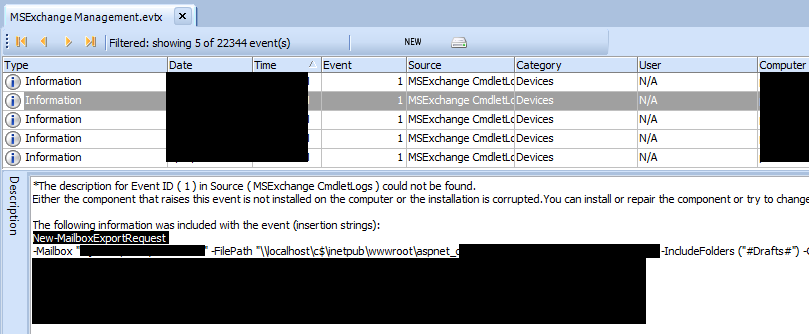
  APT abuse of Exchange is not a new topic, but I noticed there weren’t enough write-ups of hunting methodologies, so I decided to write one based on the various attack techniques I’ve seen various APTs use over the last 2 years. This is not a comprehensive guide as there honestly is WAY too much for me to write and cover (I don’t have enough time T_T but will add to this post over time). I’m going to show you specifically some key areas you can focus on when hunting for malicious behaviour. This guide will not cover the entire attack map of what happens in an APT case where Exchange is abused, it will only cover key areas to hunt on Exchange.    Over the course of the last few years there has been a heavy abuse of legacy authentication from APT groups from various nations, with a strong focus especially on EWS and other legacy auth methods as their preferred method of access. If there is a business need for legacy authentication… (aka you still have legacy authentication...

Heap Overflows on iOS ARM64: Heap Spraying, Use-After-Free (Part 3)

Image
Welcome back to part 3 of my iOS arm64 exploitation series!  If you’ve missed the blogs in the series, check them out below ^_^ Part 1: How to Reverse Engineer and Patch an iOS Application for Beginners Part 2: Guide to Reversing and Exploiting iOS binaries: ARM64 ROP Chains Part 3: Heap Overflows on iOS ARM64: Heap Spraying, Use-After-Free  If you’re more of a visual learner – I have filmed a YouTube video on this that you can check out! The YouTube video does not go into the same level of depth as this blog post will, so just keep that in mind. INTRODUCTION We’ve gone through iOS hooking, buffer overflows and simple ROP chains on ARM64. Now it’s time to talk about heap overflows and exploiting use-after-free (UAF) bugs. The goal of this blog is to show you how a UAF bug can be exploited and turned into something “malicious”. I will be walking you through step-by-step the following things: How to identify a UAF bug How to statically analyse the binary to figure out how to per...